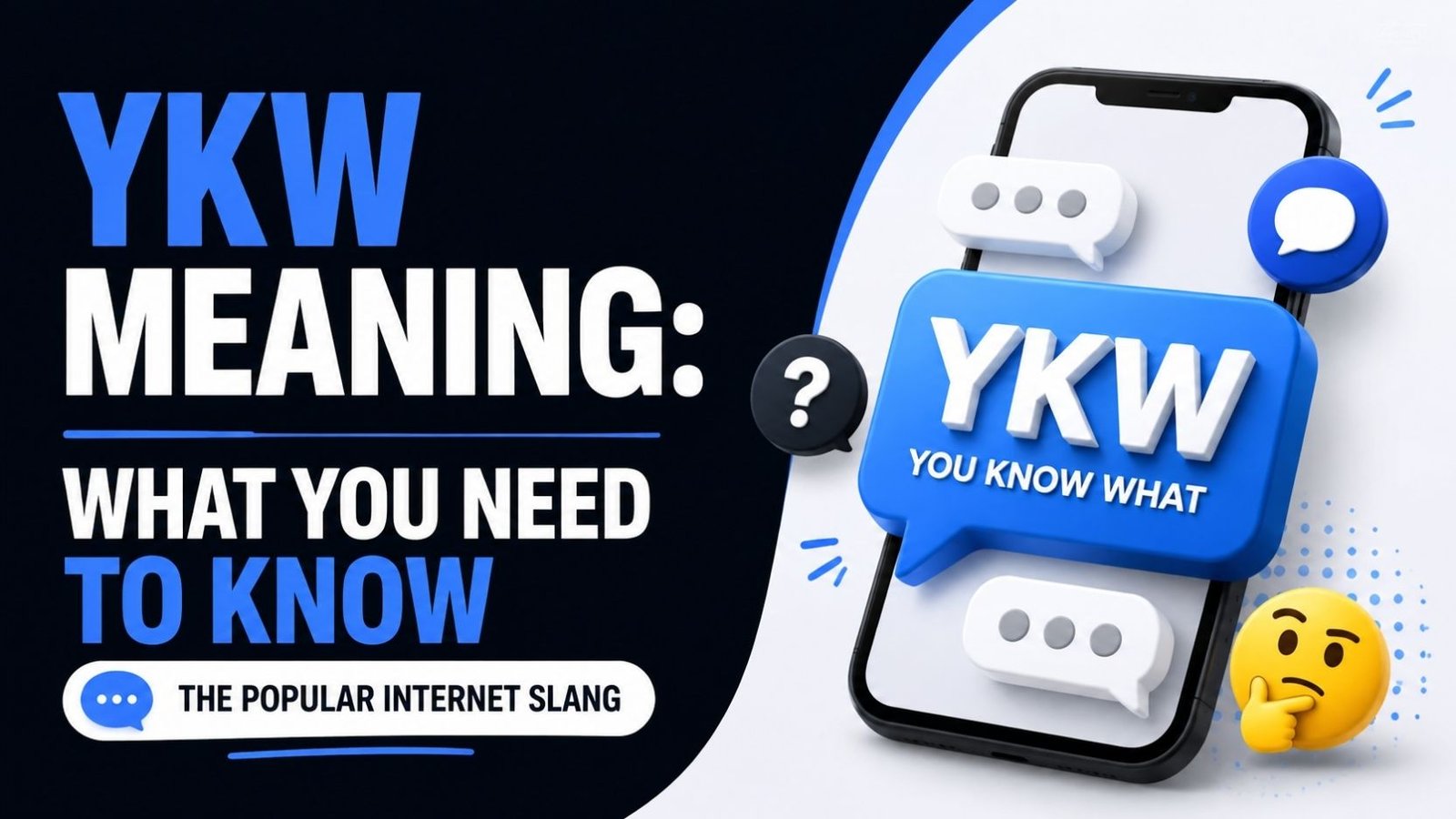
YKW is a texting and chat acronym that stands for “You Know What.” It’s used in digital communication as a quick way to express a thought or emphasize a point without typing out the full phrase. The acronym has become especially common on social media platforms, instant messaging apps, and casual online conversations where brevity is valued.
The phrase “you know what” in spoken English is often used to introduce a statement, express frustration, or highlight something important. When abbreviated as YKW in text, it serves the same purpose but with less effort. You’ll see it used by people of all ages who text regularly, though it’s particularly common among younger internet users who grew up with texting and online communication.
What Does YKW Actually Mean?
YKW simply stands for the phrase “You Know What.” When someone writes YKW in a text or chat message, they’re using it as shorthand for those three words.
The meaning is straightforward, but the intent behind using it can vary. Sometimes YKW introduces an important point the person wants to make. Other times, it signals frustration or resignation. Context matters a lot when interpreting YKW.
Here are the main ways YKW is used:
To introduce a statement or realization: “YKW, I think we should just cancel the whole plan.”
To express frustration or annoyance: “YKW, I’m tired of dealing with this.”
To emphasize a point: “YKW, they never listen to anything I say anyway.”
As a filler before sharing an opinion: “YKW, that movie was actually pretty good.”
The exact meaning depends entirely on what comes after YKW. The acronym itself is just a time-saving way to start a thought.
YKW Meaning In Different Contexts
YKW in Texting
In text messages, YKW works exactly like it does in other digital spaces. It’s a quick way to introduce a comment without typing the full phrase. Texters use it especially when they’re on mobile devices and want to save time.
Example: “Been waiting 30 mins for the bus YKW this is ridiculous”
Example: “YKW I don’t even care anymore”
YKW Meaning on Instagram
On Instagram, YKW appears in comments, captions, and direct messages. Instagram users might use it when responding to posts or sharing their thoughts quickly.
Example: “YKW this photo is absolutely fire 🔥”
Example: “Just saw your story YKW I had the same thought earlier”
YKW on TikTok
TikTok creators and viewers use YKW in comments and duets. It’s popular because TikTok’s community thrives on quick, casual communication.
Example: Comment on a video: “YKW this deserves way more views”
Example: Response to a trend: “YKW I might actually try this challenge”
YKW Meaning on Snapchat
Snapchat users incorporate YKW into snaps, captions, and direct messages. The platform’s casual nature makes acronyms like this very natural.
Example: “YKW snap me later I have something to show you”
Example: In a chat: “YKW just happened but I don’t wanna talk about it”
YKW in Chat and Messaging Apps
Whether it’s Discord, Telegram, WhatsApp, or any other messaging app, YKW functions the same way. It’s an efficient way to introduce a message.
Example: “YKW let’s just grab pizza instead of cooking”
Example: “YKW nobody asked but I’m gonna say it anyway”
Is YKW Slang Or Standard English?
YKW is definitely slang. More specifically, it’s internet slang or texting slang. It’s not something you’d find in a formal dictionary as a standalone word, and you wouldn’t use it in professional writing, academic papers, or formal emails.
Part of speech: Technically, YKW functions as an interjection or discourse marker when used at the beginning of a sentence. It serves to introduce what comes next rather than functioning as a traditional noun, verb, or adjective.
The abbreviation is purely digital. It exists because of texting and online communication. Before the internet era, people didn’t write “YKW” because there was no practical reason to abbreviate “you know what” in handwriting or formal letters.
Related Acronyms and Variations
YKW is part of a larger family of “you know” based acronyms. Here are some related ones you might encounter:
| Acronym | Meaning | Context |
| YKWIM | You Know What I Mean | Used when something doesn’t need full explanation |
| YK | You Know | Even shorter version |
| YKWTFGO | You Know What They Forgot to Give Out | Internet meme/joke phrase |
| YKWTFM | You Know What That Means | Similar to YKWIM |
| YKWIS | You Know What I’m Saying | Emphasis on understanding |
| YKWYA | You Know What You Are | Often used sarcastically or negatively |
| IYKYK | If You Know You Know | Referencing inside jokes or shared knowledge |
These variations show how flexible internet slang can be. Each serves a slightly different communicative purpose, though they all revolve around the same basic concept of quick reference to shared understanding.
How to Use YKW Correctly
Using YKW is simple, but there are some guidelines that make it more effective:
Use it casually: YKW works in texts, chats, social media, and informal online spaces. Don’t use it in professional emails or formal writing.
Make sure the context is clear: YKW works best when the follow-up statement makes sense. Don’t leave readers hanging without explanation.
Consider your audience: If you’re texting your friends, YKW is totally fine. If you’re communicating with someone you don’t know well or in a professional setting, spell out your words.
Don’t overuse it: Like any acronym or slang, using YKW too frequently can make writing feel repetitive or lazy.
Match the tone of the conversation: If everyone in the chat is using informal language and acronyms, YKW fits naturally. In a more formal conversation, it would stand out.
Common Mistakes With YKW
Mistake 1: Using YKW Without Context
❌ Incorrect: “YKW” (posted alone in a message)
✅ Correct: “YKW I actually enjoyed that horror movie”
When YKW stands alone, it confuses readers because they don’t know what point you’re making. Always follow it with the actual thought.
Mistake 2: Using YKW in Formal Writing
❌ Incorrect: “YKW, the quarterly projections indicate we should focus on market expansion.”
✅ Correct: “You know what, the quarterly projections indicate we should focus on market expansion.” (Or better yet, just make the statement directly.)
YKW is slang. Formal writing requires spelled-out words.
Mistake 3: Confusing YKW With YKWIM
These aren’t the same thing. YKW introduces a new thought. YKWIM assumes the other person already understands your point.
❌ Confusing: “YKW I’m talking about?” (This is actually YKWIM)
✅ Clear: “YKWIM” (to mean “you understand what I’m saying”)
✅ Clear: “YKW, I think that’s a bad idea” (introducing a new thought)
Mistake 4: Using YKW in Text Where Confusion Might Happen
If someone doesn’t understand internet slang or texting abbreviations, YKW might confuse them. Older relatives, professional contacts, or people unfamiliar with casual texting may not recognize the acronym.
Pronunciation and How to Say YKW Out Loud
YKW is typically pronounced as three separate letters: “Why Kay Double-You.” You can also say it as the full phrase: “You Know What.”
In casual conversation, people usually just say “you know what” rather than spelling out the letters. You’d only say “why kay double-you” if you were specifically referring to the acronym itself or reading it aloud from a text.
Example: “He just texted me like ten times YKW—well, ‘you know what’ I mean—he texted me a lot.”
Why Is YKW So Popular?
YKW became popular for simple reasons:
- Speed: Typing “YKW” takes less time than “you know what,” especially on mobile devices.
- Casualness: The abbreviation signals informal, friendly communication rather than stiff formality.
- Efficiency: In fast-paced conversations, people naturally abbreviate common phrases.
- Generational shift: Younger people who grew up texting naturally adopted these kinds of abbreviations as normal communication.
- Peer adoption: Once friends and communities started using YKW, it became normal within those groups, so others followed.
Internet slang spreads through communities. What starts as a time-saving shortcut becomes a cultural marker of how that community communicates.
YKW vs. Other Common Text Abbreviations
YKW exists in a broader ecosystem of texting abbreviations. Here’s how it compares to similar ones:
| Abbreviation | Stands For | Usage |
| YKW | You Know What | Introduces a statement |
| SMH | Shaking My Head | Expresses disapproval |
| TBH | To Be Honest | Indicates frank opinion |
| NGL | Not Gonna Lie | Similar to TBH |
| IDK | I Don’t Know | Expresses uncertainty |
| IMO | In My Opinion | States a personal view |
| JK | Just Kidding | Indicates joking tone |
YKW is different from these because it specifically prepares the reader for what comes next, rather than commenting on something already said.
Does YKW Work in Medical or Technical Contexts?
No. YKW doesn’t appear in medical, scientific, or technical fields. When doctors, engineers, researchers, or other professionals communicate in their fields, they use full terminology and formal language. YKW is purely social and digital communication slang.
There is no medical meaning for YKW. If you’ve encountered it in a medical context, it was likely used casually by someone texting about a health topic, not as formal medical terminology.
Frequently Asked Questions About YKW
What does YKW mean exactly?
\YKW stands for “You Know What.” It’s an internet slang abbreviation used in texting and online chat to introduce a statement or thought quickly.
Is YKW the same as YKWIM?
No. YKW means “You Know What” and introduces a new thought. YKWIM means “You Know What I Mean” and is used when you assume someone already understands your point. They’re related but different.
Can I use YKW in an essay or school assignment?
No. YKW is internet slang, not appropriate for formal academic writing. Use “you know what” spelled out if it truly belongs in your essay, though usually the phrase isn’t necessary in formal writing at all.
Does everyone understand what YKW means?
Most people familiar with texting and social media understand it. However, people unfamiliar with internet slang, older generations, or those who don’t text regularly might not recognize it immediately.
How is YKW pronounced?
You can pronounce it as three letters “Why Kay Double-You” or just say the full phrase “You Know What.” Most people just say the full phrase in conversation.
Where did YKW come from?
YKW emerged naturally as texting and internet communication grew. It’s a direct abbreviation of “you know what,” created for speed and convenience in digital messages.
Is YKW used on Twitter or X?
Yes, YKW appears on Twitter/X just like other platforms, though longer-form posts make abbreviations slightly less necessary than on character-limited platforms.
Can YKW be used formally?
No. YKW should only be used in casual, informal communication. Professional emails, business writing, and formal communications should avoid it entirely.
What’s the difference between YKW and just saying “like”?
YKW specifically introduces a statement, while “like” is more of a filler word. YKW has more intentional meaning—it signals that what follows is important or worth saying.
Do people use YKW in real life conversations?
Rarely. YKW is written slang. In spoken English, people just say “you know what” naturally. Written abbreviations don’t typically carry over to speech unless someone is reading a text message aloud.
Final Takeaway
YKW is a straightforward acronym that means “You Know What.” It’s become standard in texting, social media, and casual online communication because it’s fast, casual, and effective. The acronym serves an important function in digital communication: introducing thoughts and statements in a way that feels natural and conversational.
Understanding YKW helps you navigate internet communication better. Whether you’re reading messages from friends, scrolling through social media, or communicating online yourself, knowing what these common abbreviations mean makes the interaction smoother and more efficient. Like all internet slang, YKW is part of how digital communication has evolved to be quicker and more casual than traditional writing.

Anaya Raza is the author of Mean Xpert, a trusted resource for clear and easy-to-understand explanations of meanings, words, slang, and names. With 4 years of experience, she focuses on providing accurate, useful, and reader-friendly information that helps readers understand the meaning behind everyday words, phrases, and names.